Walk: No, Really Haz Air 💀
Distance: Yoga
Ciwt is looking forward to taking an online Contemporary Drama seminar with her friend. The plays are here and waiting in in our now yellow light. Fingers crossed for less real life drama.
Thursday, September 10, 2020
Wednesday, September 9, 2020
Life on Mars --- Days 9/145, 146 & 147
Walks: 1. No (record breaking heat wave), 2. A Few Monday errands 3. GG Park (?)
Distance: 1. 0, small yoga, too heat stupid to write 2. 1 mile, yoga 3. 1 very obscure mile, yoga
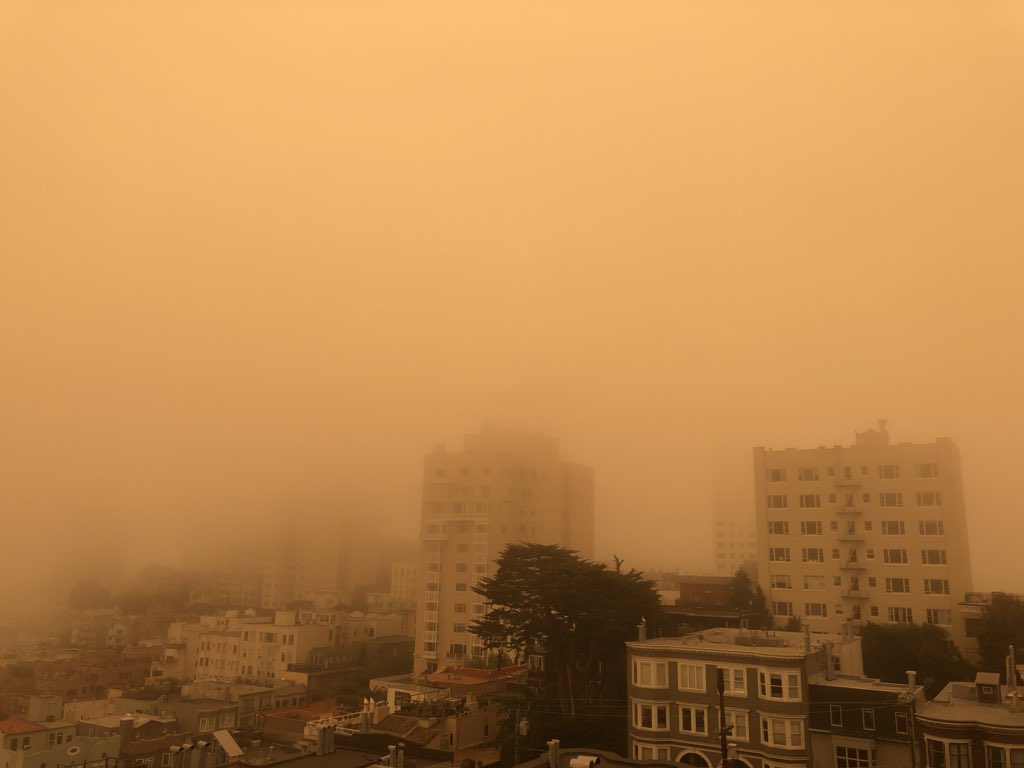
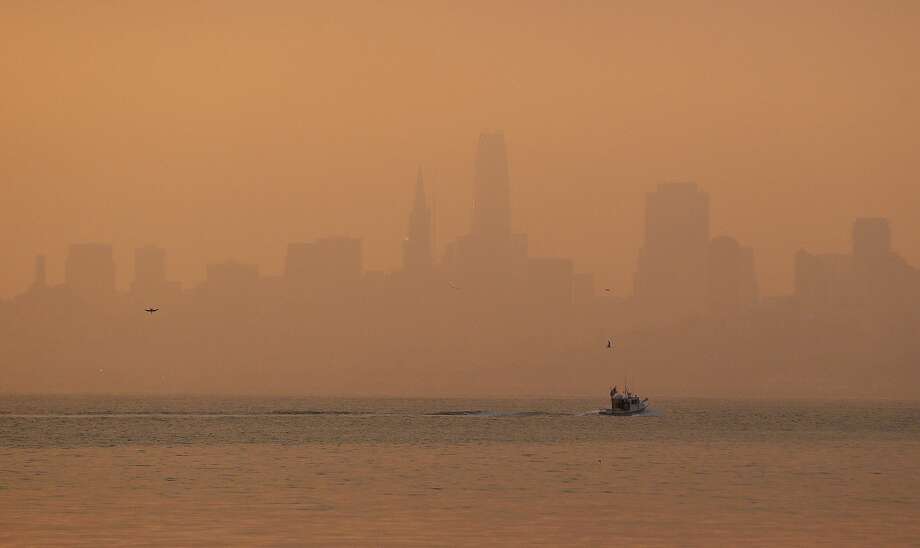
San Francisco Today 7:15 a.m. , Noon, Until ?
Ciwt's Hallway 9:00 a.m., 10:30 am, maybe all day; rest of her place equally dark
Sunday, September 6, 2020
Saturday, September 5, 2020
Lift Those Books --- Day 9/143
Walk: No, now it's too hot 😑 (with haz air)
Distance: 0, restorative yoga
Ciwt thought a good way to get exercise on a heat wave day was arranging heavy art books 💪.
Distance: 0, restorative yoga
Friday, September 4, 2020
Water Lilies Of Course --- Day 9/142
Distance: 3.6, Yoga
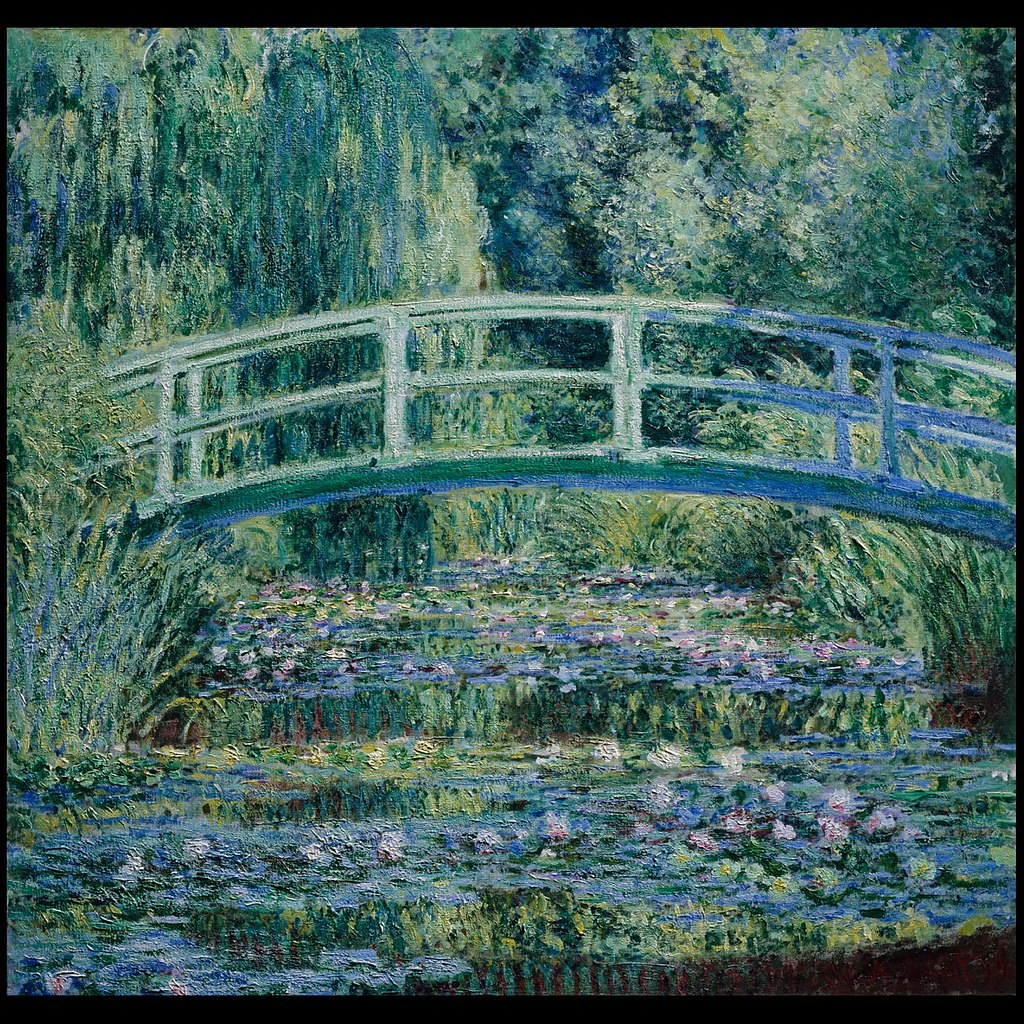
| Water Lilies and Japanese Bridge, 1899 |
One can't talk about Monet without talking about his 250 Water Lily paintings which depicted the flowers and surroundings of his home in Giverny. These paintings and the gardens themselves were the primary focus of the last 30 years of his life. He loved them both, and once said, "Aside from painting and gardening, I am good for nothing." And he also felt he was a better gardener than he was a painter - which is saying a lot!
It is lucky Monet found painting (and selling) the lilies "an extension of my life" because they were also a huge extension of his budget. He employed six full time gardeners, one of whose daily assignment was to dust and de-pollenate the pads and water so that the colorful light they reflected was pure. And he actually had a branch of the Epte river diverted to his property to fill his lily pond. This was much to the objections of his neighbors who were almost successful in preventing one of the most beautiful gardens and series of paintings ever created.
The paintings were beautiful, refined, sparklng, serene:
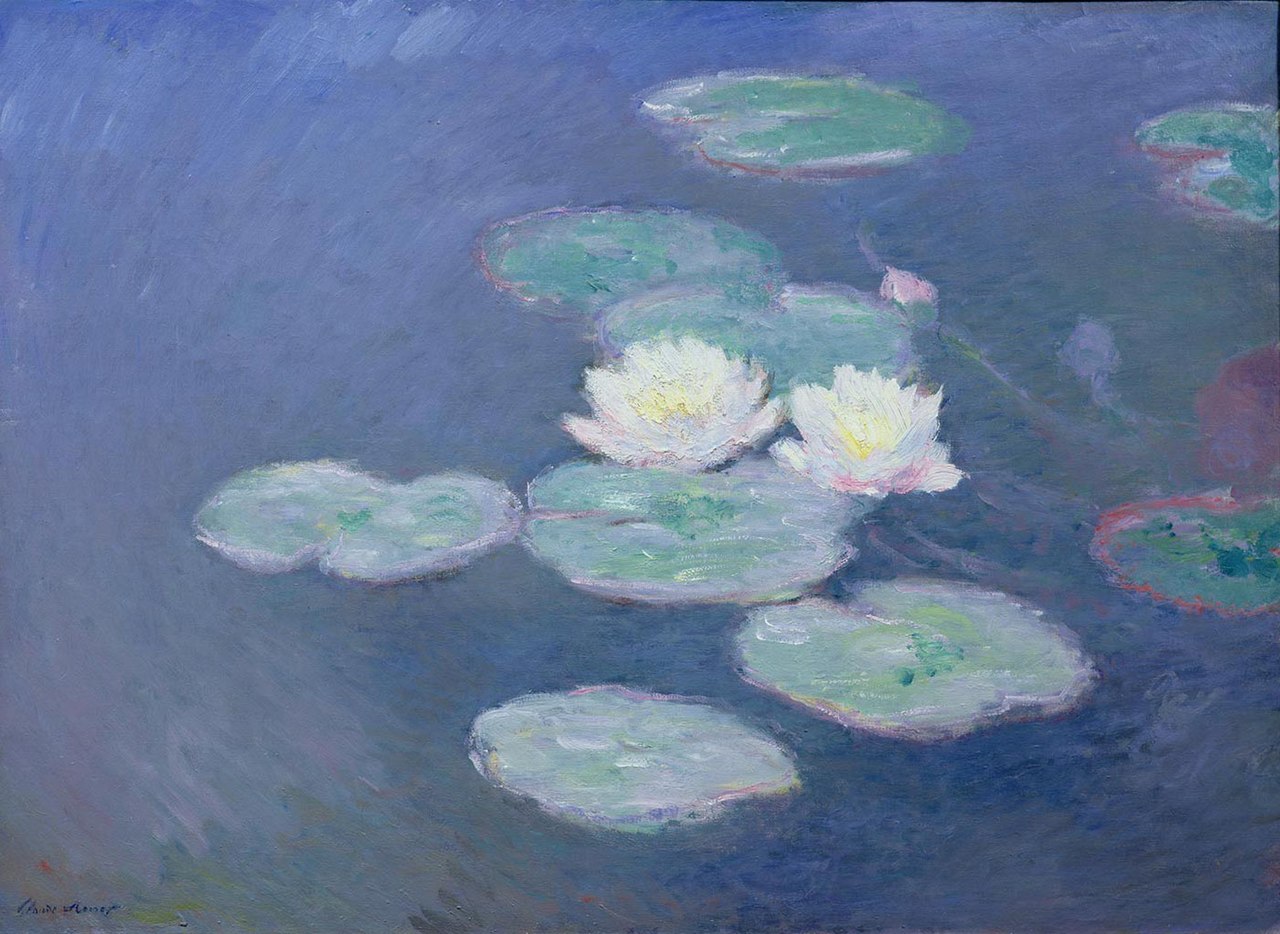
Water Lilies in the Evening, 1896
|
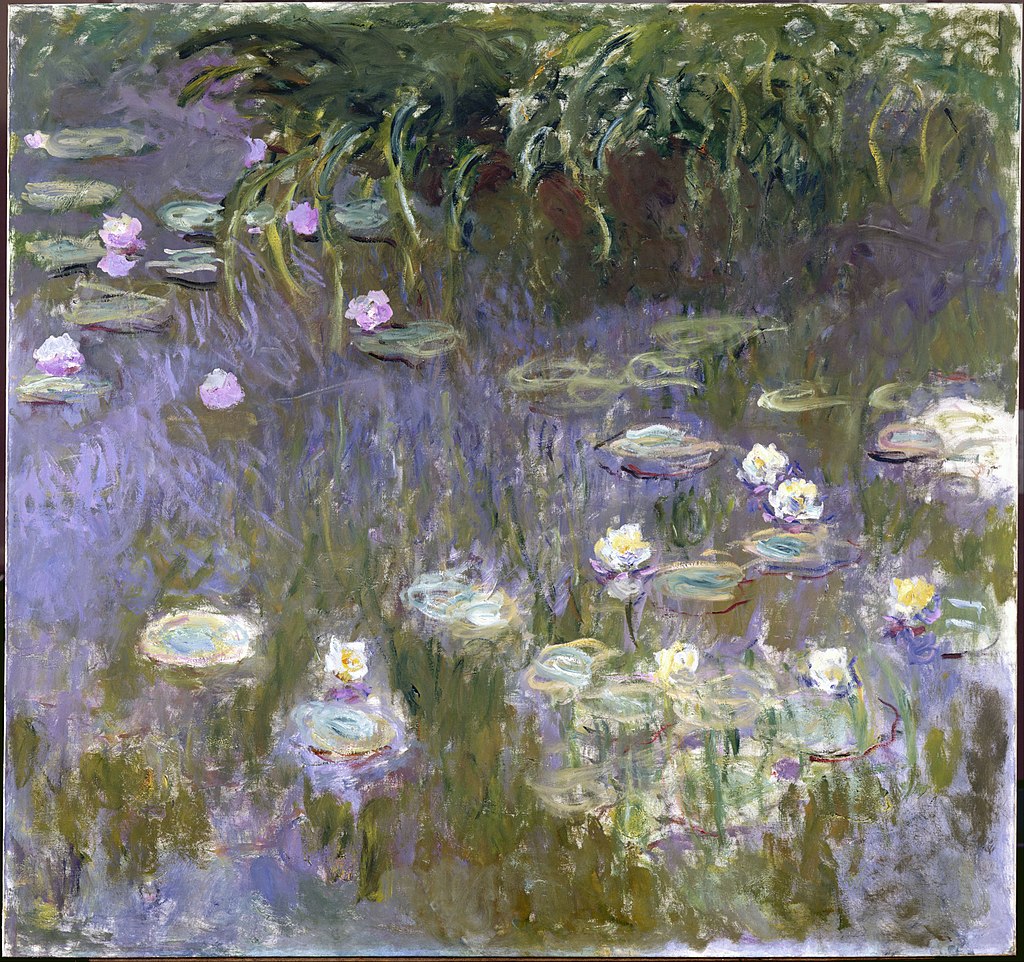
| Water Lilies, 1922 |
The reason for the change was cataracts. Monet began having visual problems as a result of them around 1912 and his palette became gloomier, murkier and less refined.
Ciwt considers Monet's last years sad because she feels he was. Sad, lonely without his wife and son, depressed, possibly a bit demented and losing the greated gift he was graced with: his special eye sight. But there are others who don't see it this way at all. Many of them love the later water lily paintings and some see them as early abstract art. Oh well, such are the different visions of the art world. Anyway, as she said a couple of CIWT's ago, she sometimes leans more toward the early Monets, particularly The Magpie
.
And really the last word belongs to Claude Monet: Everyone discusses my art and pretends to understand, as if it were necessary to understand, when it is simply necessary to love.
Thursday, September 3, 2020
To Capture Elusive Nature --- Day 9/141
Walk: Another Haz Air Day
Distance: 0, Yoga
I would like to paint the way a bird sings.
Claude Monet
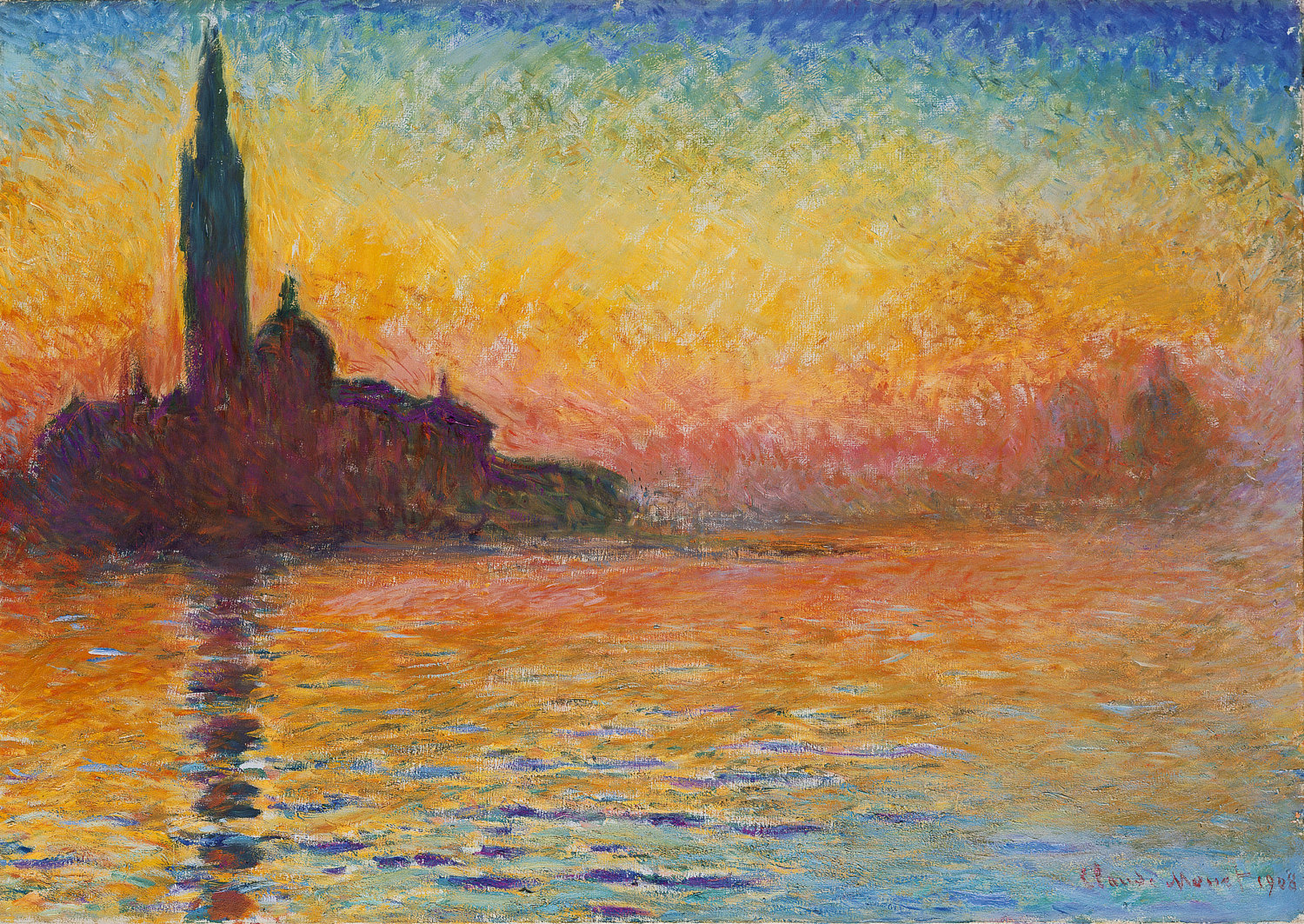
Monet wasn't primarily interested in painting the beauty of nature; he wasn't after a beautiful painting. He was after nature itself, capturing it. He didn't see a sea or a cliff or even a water lily. He saw countless particles of myriad colors that comprise nature; a pink here, a deeper pink there, bright yellow, lilac, the glints of light and color that made up the whole.
And it wasn't easy to see this way, to have this drive. As he said, "Color is my daylong obsession, my joy, my torment." In search of it he flirted with illness even death climbing rocks, standing in icy sea blasts of sea winds or snowstorms working as one of the first painters to ply his talents 'en plein air,' ie, outside - often all day.
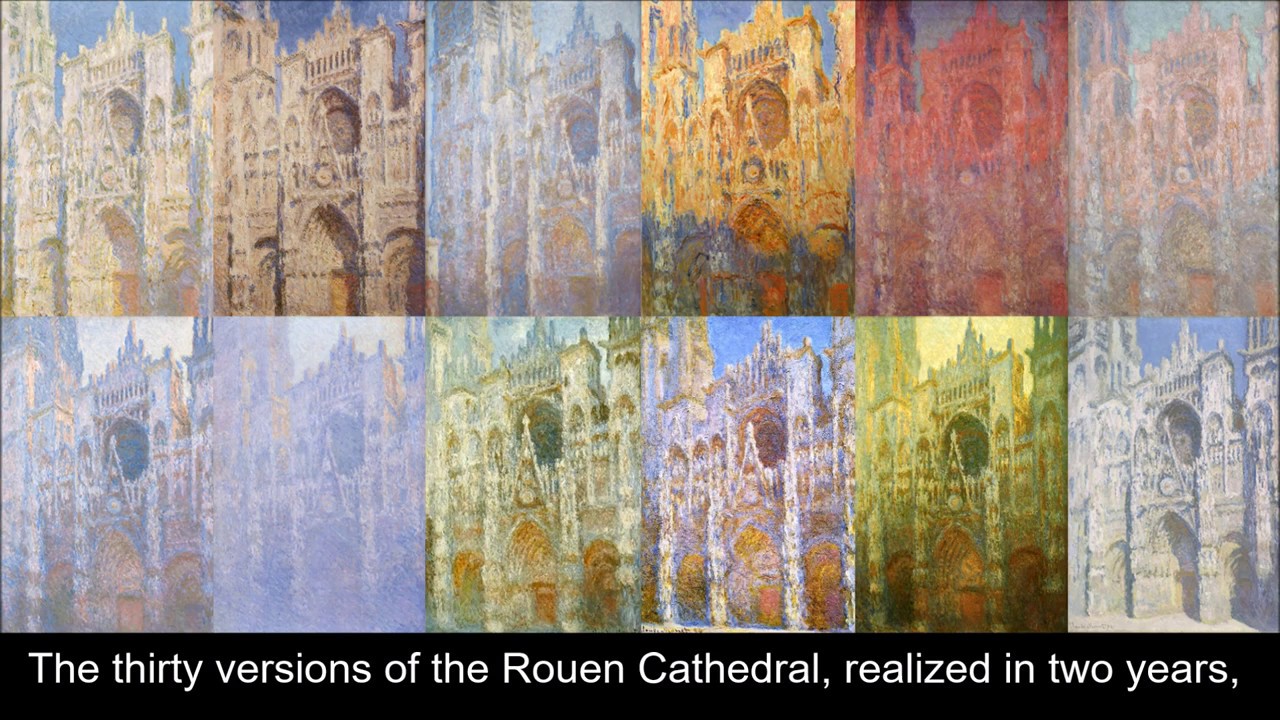
The obsession was there from the beginning and manifested most dramatically in his series paintings. This practice of painting the same subject at different times of day began in earnest in the 1880's and continued until the end of his life in 1926. His most well known series included Mornings on the Seine, Houses of Parliament, Rouen Cathedral.
But probably the most significant series for him during these years was his 25 painting Haystack series from 1990-1991. Fifteen of these were the first to be exhibited as a series and were recognized as a breakthrough in French art. But most importantly for Monet, they were immediately popular. All the paintings in the show sold within days, and this set him free - at last! - financially. His reputation and prices rose steeply and he was able to buy outright the house and grounds at Giverny and start constructing a water lily pond. (NB: He was finally past subsistence living, but never a man to deny himself, he contiued to live at an economic edge. Another story in another CIWT).
No matter what his subject, Monet's underlying fascination in all his series was light, its intransience. He needed at the deepest level to capture that. Even knowing his quest was ultimately impossible, he would rise around 3:30 in the morning so as to see the first light, set up multiple canvases, then paint and move rapidly from one to another as the momentary light changed. This process was repeated day after day whatever the weather, sometimes for weeks or months until he deemed each canvas as complete as possible. As he said, "I'm never finished with my paintings; the further I get, the more I seek the impossible and the more powerless I feel."
Monet's series culminated of course in his great and most famous Water Lilies paintings. More on these in a future CIWT.
Distance: 0, Yoga
I would like to paint the way a bird sings.
Claude Monet
Monet wasn't primarily interested in painting the beauty of nature; he wasn't after a beautiful painting. He was after nature itself, capturing it. He didn't see a sea or a cliff or even a water lily. He saw countless particles of myriad colors that comprise nature; a pink here, a deeper pink there, bright yellow, lilac, the glints of light and color that made up the whole.
![]() |
| San Giorgio Maggiore at Dusk, 1908 |
And it wasn't easy to see this way, to have this drive. As he said, "Color is my daylong obsession, my joy, my torment." In search of it he flirted with illness even death climbing rocks, standing in icy sea blasts of sea winds or snowstorms working as one of the first painters to ply his talents 'en plein air,' ie, outside - often all day.
![]() |
| Cart on the Snow Covered Road with Saint-Simeon Farm, 1865 |
The obsession was there from the beginning and manifested most dramatically in his series paintings. This practice of painting the same subject at different times of day began in earnest in the 1880's and continued until the end of his life in 1926. His most well known series included Mornings on the Seine, Houses of Parliament, Rouen Cathedral.
But probably the most significant series for him during these years was his 25 painting Haystack series from 1990-1991. Fifteen of these were the first to be exhibited as a series and were recognized as a breakthrough in French art. But most importantly for Monet, they were immediately popular. All the paintings in the show sold within days, and this set him free - at last! - financially. His reputation and prices rose steeply and he was able to buy outright the house and grounds at Giverny and start constructing a water lily pond. (NB: He was finally past subsistence living, but never a man to deny himself, he contiued to live at an economic edge. Another story in another CIWT).
No matter what his subject, Monet's underlying fascination in all his series was light, its intransience. He needed at the deepest level to capture that. Even knowing his quest was ultimately impossible, he would rise around 3:30 in the morning so as to see the first light, set up multiple canvases, then paint and move rapidly from one to another as the momentary light changed. This process was repeated day after day whatever the weather, sometimes for weeks or months until he deemed each canvas as complete as possible. As he said, "I'm never finished with my paintings; the further I get, the more I seek the impossible and the more powerless I feel."
Monet's series culminated of course in his great and most famous Water Lilies paintings. More on these in a future CIWT.
Wednesday, September 2, 2020
Monet Before Monet --- Day 9/140
Distance: small yoga
Before Monet became Claude Monet, the Father of Impressionism, around the age of 32, he spent much of his time called by his given name "Oscar," rebellious, impoverished and painting some of Ciwt's favorites of all his paintings. Like:
Impressionist paintings so adored by the public. Perhaps...
Tuesday, September 1, 2020
No Amy, Month 6 --- Day 9/139
Walk: Hood
Distance: 2.6 miles, Housecleaning, small yoga
Now multiply by two and there you have most of Ciwt's housecleaning.
Actually in fairness to them, Ciwt should say her cats are really quite socialized and tidy. Now, if they could just figure out how to stop shedding and tracking litter....
Subscribe to:
Posts (Atom)