Wednesday, December 31, 2025

Rain: Paris --- Days 15/9,10, 11

Walk: No, Rain

Activity: One hour Yoga Room combination cardio, yoga, pt 


Gustave Caillebotte (Fr. 1848-1894), Paris Street, Rainy Weather, 1877, ca 7' x 10', oil on canvas


The San Francisco weather people are predicting six straight days of cold, blustery rain.  So Ciwt thought it would be a good time to visit some ways artists have depicted rain over the years. She begins with one of several masterpieces by the seminal artist, patron, collector, Gustave Caillebotte without whom there probably would not be a D'Orsay Museum in Paris.*

The main parts of Baron Haussmann's vast renovation of Paris (1853-187) were only recently completed when Caillebotte painted Paris Street, Rainy Weather.  The Parisians had been subjected to decades of dislocation, demolition, massive inconvenience and turmoil.  Few beyond Caillebotte were ready to welcome the new visuals, the steep architecture, the wide boulevards, the new parks, the doubling of the city's size.  But it was Caillebotte's way to embrace the new, and in Paris Street, Rainy Day he turned his artistic eye to how the light, weather and season affected the atmosphere and human activities of this new urban landscape.  

The large painting is owned by the Art Institute of Chicago where it has delighted visitors for nearly a century and a half.  This is what how they present the work on their website:


This complex intersection, just minutes away from the Saint-Lazare train station, represents in microcosm the changing urban milieu of late nineteenth-century Paris. Gustave Caillebotte grew up near this district when it was a relatively unsettled hill with narrow, crooked streets. As part of a new city plan designed by Baron Georges-Eugène Haussmann, these streets were relaid and their buildings razed during the artist’s lifetime. In this monumental urban view, which measures almost seven by ten feet and is considered the artist’s masterpiece, Caillebotte strikingly captured a vast, stark modernity, complete with life-size figures strolling in the foreground and wearing the latest fashions. The painting’s highly crafted surface, rigorous perspective, and grand scale pleased Parisian audiences accustomed to the academic aesthetic of the official Salon. On the other hand, its asymmetrical composition, unusually cropped forms, rain-washed mood, and candidly contemporary subject stimulated a more radical sensibility. For these reasons, the painting dominated the celebrated Impressionist exhibition of 1877, largely organized by the artist himself. In many ways, Caillebotte’s frozen poetry of the Parisian bourgeoisie prefigures Georges Seurat’s luminous Sunday on La Grande Jatte—1884, painted less than a decade later.


* See CIWT Day 9/84 and Day 13/230

Sunday, December 28, 2025

From Seedy to Tweedy --- Days 15/7 & 8

Walks: Hood

Distances: 3.75 average


So Ciwt has been considering what she might watch in this Christmas - New Years stretch.  Marty Supreme is getting excellent reviews for Timothee Chalamet's Oscar worthy performance, its director, cinematography and other perfomers.  But Ciwt is hesitating because she saw Uncut Gems by the same director a few years ago and found it a lot of work to watch.  Adam Sandler was excellent but the movie, with its close up view of a seedy slice of life was difficult for her to take in.  It also moved jittery fast so was agitating to stay with.  And the dialogue was so machine gun rapid, Ciwt strained to hear and keep up with the plot.  Her sense is Marty Supreme has most of these same elements, so she is passing for now. (But will need to get there before Oscar season).


Instead she decided to try an older, English series called Portrait Artist of the Year.  It had been recommended by a friend, and, as much as Ciwt likes to learn about art, she was doubtful.  Probably too ho-hum and twee. Intrigued, she went to Amazon Prime and gave one episode a look-see.  Amazingly, it was very informative and a real nail biter.  So, she's off to episode two.  TaTa...


Friday, December 26, 2025

'Natural' Choice --- Day 15/6

Walk: Hood making post xmas returns

Distance: 4 miles

So, in this winter holiday season Ciwt looks at the winter scenes in so many Christmas cards and remembers her times skiing down mountains in Idaho, sliding down hills on flying saucers, skating on frozen lakes in Minnesota and other exhilerating activities in her youth.  Would she rather still be living closer to nature surrounded by the wonders of winter, coming into warm hearths with friends after cross country skiing in the soft white beauty of new snow?  Absolutely.

Same for paddle tennis, cycling, long country walks and horseback rides in the spring and winter.  And glorious summers playing tennis, water skiing, zooming all over the lake in boats with friends.  

Here in Northern California, we have one season:  luckily it is fall, the one she resonates with most deeply, in all its various moods.  Yet, yes, she misses the changing seasons.  But she thrives in light and winters are often long, frigid and dark, spring is very short and muddy, after June, summer is muggy with dog days on the lake and mosquitos throughout, fall is short with the spectacular autumn leaves only lasting a few weeks. Plus, and most important, she was lucky enough to have enjoyed all these seasons and their wonders, sports, heartwarming get togethers with nearby family and friends. These are wonderful memories.

But now is no longer her time for sports that might break bones, twist ankles, wrench backs.  And  drives on icy roads or walks on icy paths to various appointments and necessary errands are best avoided.  Friends and family who are still here are scattered.  

It is time now for maintenance, resting, enjoying the life she has put together over decades with as much ease, stimulation, convenience and health as possible.  And San Francisco, city living where she can easily walk, bus or drive to all necessary appointments, daily supplies and extensive parks and trails, cultural activities that challenge and keep her growing, is what suits her now.  The place she chooses to be.  But, yes, parts of her long for country, sports and all four seasons.

Thursday, December 25, 2025

Christmas, 2025 --- Days 15/4 & 5

Walks: Hood between storms

Distances: 2.5 miles

Wishing CIWT Readers Peaceful Christmas Hoidays

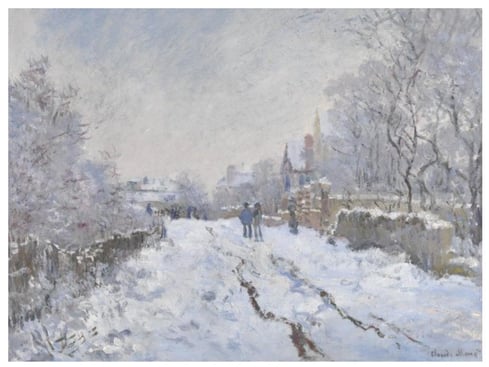
Claude Monet, Snow Scene at Argenteuil, 1875, oil on canvas


Tuesday, December 23, 2025

Neighborhood Holiday House Decorations NIGHT TIME Winners --- Day 15/3

Walk: Hood

Distance: 3.5 miles


Best Whole House:  Winner 

Look at our Whole House Daytime Winner at night!!

So Ciwt has learned that her neighbors save their best holiday decor for night.  During the day she sees  lots of lights almost invisible or dark .   


But at night her neighborhood comes to sparkling, gorgeous light. Ciwt doesn't go out to photograph it, but, some neighbor with a great night camera did.  And, as a holiday gift to her readers, Ciwt is posting his holiday walk through the festive light show that happens in her  neighborhood during the holidays. Just click the link below.   Enjoy!  And Happy Holidays!

Please enjoy a night walk through Ciwt's neighborhood during holiday season 

Monday, December 22, 2025

Neighborhood Holiday House Decorations DAYTIME Winners --- Day 15/2

Walk: Hood between rainstorms and power outages
Distance: 3.75 miles


So the holidays are near and neighborhood house decorations are complete.  The time has come for Ciwt's Neighborhood Holiday Decorations DAYTIME Winners!!!  ***


Best Whole House:  Winner


Best Whole House:  Runner Up

It's our Halloween winner.  So much work to take it away and put this out.

Best Wreath


Best Bow House

Not exciting but very together 

Best Characters 


Made Ciwt Smile


***  Stay tuned for NIGHTTIME Winners.....

Sunday, December 21, 2025

Day of Beginnings --- Day 15/1

Walk: Probaby not (wind, rain🍃🍃⛆)

Distance: 

CIWT turns 15


Winter Turns One


Saturday, December 20, 2025

Bye, Bye 14 --- Days 14/364 & 365

Walk: Hood

Distance: average 4 miles


Oh my gosh!!   Could this be possible??  CIWT's 14th year is ending today.  To think Ciwt began started writing as a personal challenge to write one entry every day for a year.  She did succeed, but, unexpectedly, she got attached to CIWT somewhere in that year.  So she kept going with CIWT but relaxed her daily deadline.  Best of all, some of you found CIWT and Ciwt in that first year and others have come along since.  You've made all the difference and Ciwt sends you fourteen heartfelt Thank you's.


Thursday, December 18, 2025

Just Hi --- Day 14/360, 361, 362 & 363

Walks: Hood

Distances:  3.5 miles average


Sunday, December 14, 2025

Genius Meets Genius --- Day 14/359

Walk: yes, Hood in the cold

Distance: 3 miles


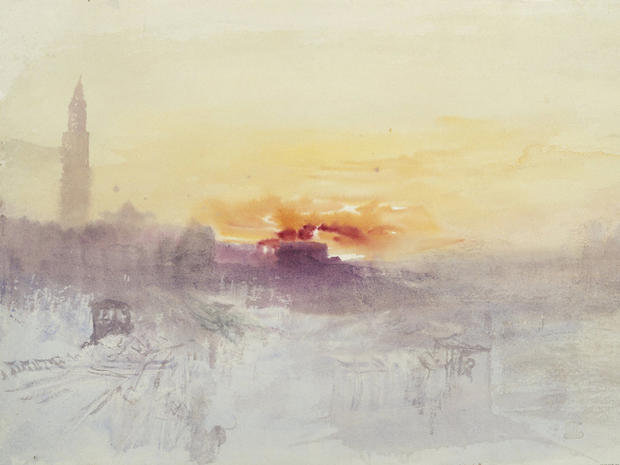
JMW Turner, Venice at Sunrise from the Hotel Europa, with Campanile of San Marco, c/ 1840,  watercolor


For safety during the Franco Prussion War (1870-1871) Claude Monet moved to London with his wife and son. It was his first trip to that city and, at its National Gallery, his first encounter with the works of  Britain's master artist, JMW Turner. He then spent the majority of his art viewing hours communing with it. After the war was settled and the little family had returned to Paris, Monet made several trips back to London. Possibly for the sole purpose of viewing the Turners once again. Every time it was a meeting of two pioneer art geniuses.

What Monet saw were inventive ways of mixing pigments, freeing brushwork, using color and  capturing mood. Basically, the overall elevation of landscape to a more meaningful level. Beyond that, one can only imagine what Monet was taking in, learning, electrified by. He had just begun to come to many of these techiques on his own in France, and here was a master. Suffice it to say, upon returning to France after his first stay in London, Monet abandoned all subject matter except the play of light in the outdoors.


Claude Monet, Impression, Sunrise, 1872, oil on canvas


Saturday, December 13, 2025

Winter, 1868 --- Days 14/357 & 358

Walks: Hood

Distances: 4 still cold miles

Claude Monet, The Magpie, 1868, oil on canvas

Here we have Claude Monet well on his way to what came to be known in art as impressionism and one of Ciwt's favorite paintings. Impressionism wouldn't be coined as an art term for another four years and Monet was focused on capturing the softness of resting snow, the near ethereal light and shadows and the enveloping quiet of the still winter weather he was out painting in.  

He was also inventing or perfecting new techniques and using colors in entirely fresh ways. He had wide skill with his brush and here often applied paint with light, wispy strokes.  His vision was astoundingly sharp so he could see and then paint the many colors before him.  

Pink building and sky:


Red, yellow, blue sky in the distance,:


And, remarkable for the time, blue shadows when black was traditionally used for them:


And then there's that bird, that magpie, bringing aliveness to the still scene:


To Ciwt this magpie is many things: delicate, strong, self-possessed, solitary and alert.  Magpies are restless birds though, so there is a sense of moment while it has landed and anticipation about when it will move on.  

Ciwt supposes that, like her, the myriad people who have loved this painting over the years have also projected their own thoughts and feelings onto the bird.  Among Ciwt's projections, is Monet himself.

Like the magpie, Monet was alone in many ways.  At the time of this painting, he had finally attracted his first patron and had some income but there was no guarantee another was coming.  For years he had been dirt poor.  His father never approved of his profession and refused to help him financially, even when he and his young lover (who would become his wife), Camille Doncieux, had a son. He lived by moving from place to place (sometimes needing to leave them alone) hoping to attract patrons or just sell a canvas. He often skipped out on his rent agreements, left his debts unpaid and in the worst of it became so anxious and despairing he made a suicide attempt.  

But, like the bird, he was self possessed and had a powerful, abiding (and correct!) belief in his artistic talent.  So, he famously trudged outside with his paints and easel even in the most forbidding weather often working from before dawn to dark or until his fingers could no longer move from the cold. He was obsessed with nature and bringing  it - its colors, its varying luminiosity, the feelings it evoked - onto his canvas. He studied nature, light and color patterns, invented or perfected brushwork techniques in pasionate service to his goal. Along the way he also happened to initiate a whole new art movement and is now known as The Father of Impressionism.

Thursday, December 11, 2025

Winter, 1842 --- Days 14/355 & 356

Walks: Hood

Distance: 3.5 cold miles


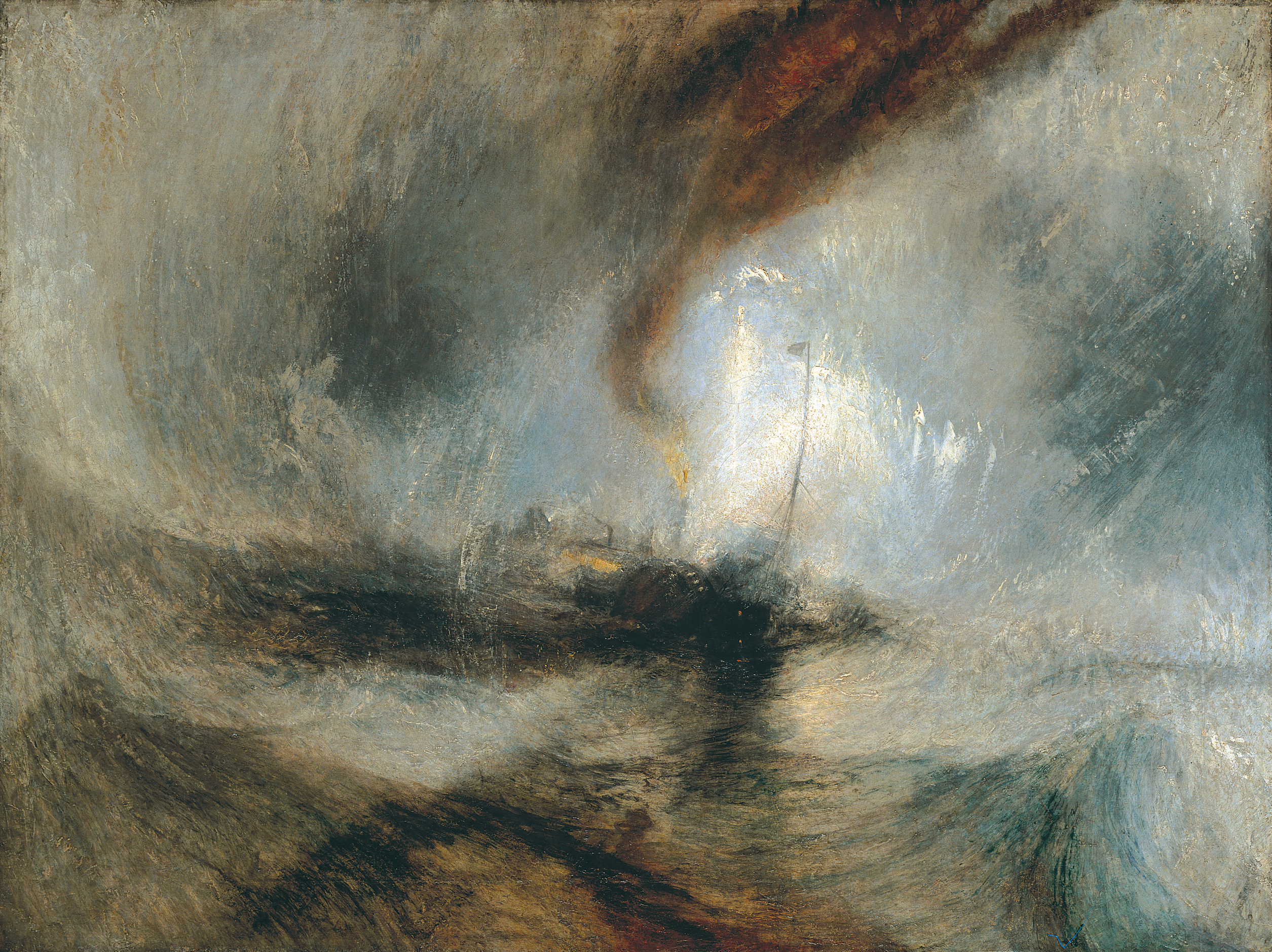
JMW Turner (1775-1851), Snow Storm - Steam Boat of a Harbour's Mouth Making Signals in Shallow Water, and going by the Lead. (The Author was in this Storm on the Night the "Ariel" left Harwich), 1842, Oil on canvas


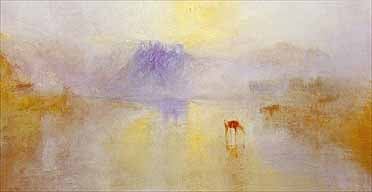
So when Ciwt thinks of the great JMW Turner's art she tends to picture his ethereal, glowing orange/yellow skies and peaceful images of English manor house estates and his paintings of the English seas and river Thames close to London: 

JMW Turner (1775-1851), Norham Castle Sunrise, ca 1845, oil on canvas

JMW Turner, Joseph Mallord William Turner (1775-1851), The Fighting Temeraire,Tugged to Her Last Berth to be Broken UP, 1839 , Oil on canvas.

This thinking overlooks the many intensely dramatic paintings he executed during his middle and late years.  It also overlooks the fact that Turner often painted winter, and it was never charming, snow covered, quiet winter. Like the Snow Storm painting above, his winters were violent, dangerous and then sublime, which to Turner meant the overwhelming beauty and awe-inspiring grandeur of nature's elements.

She also forgets that Turner painted in the midst of the Industrial Revolution in England. Although Turner had a wide range of interests and was open to technology, his paintings make clear his deeply felt conclusion that no human invention could match the far greater might of nature, the sublime. In Snow Storm, Turner has chosen to feature a steamboat, a symbol of new 19th century technology, being utterly overwhelmed by the power of the sea.  

Overlooked by Ciwt too is Turner's propensity toward the highly dramatic combination of real world and fiction - particularly in his later art. He was a highly focused, technically inventive and painter with an increasingly romantic mindset who believed man's emotional, individual responses to the world were of supreme importance.  

This whether true or better served by dramatic fiction as shown by announcing in the full title of Snow Storm that he had been on this boat and in this storm. He claimed that he had been lashed to the mast of the ship in order to truly experience and convey nature's turbulent ferocity.  In fact Turner was 67 when the painting was made and no sailors came forward to confirm they had tied Turner to the mast.  

As was often common because Turner was ahead of his critics and already opening the door to future art movements like impressionism and expressionism, reaction to Snow Storm was deeply divided when it was made public. "Soap suds and white wash," one critic announced. Turner was reportedly hurt by the negative remarks, but continued on his passionate, inventive - obsessive really - artistic journey.  Luckily and importantly so. Monet, Rothko and countless artists after Turner were transformed or emboldened upon encountering Turner's paintings, and Turner is widely regarded as the "Father of Modern Art."


Tuesday, December 9, 2025

Winter, 1565 --- Day 14/354

Walk: Hood 

Distance: 3 v. cold miles


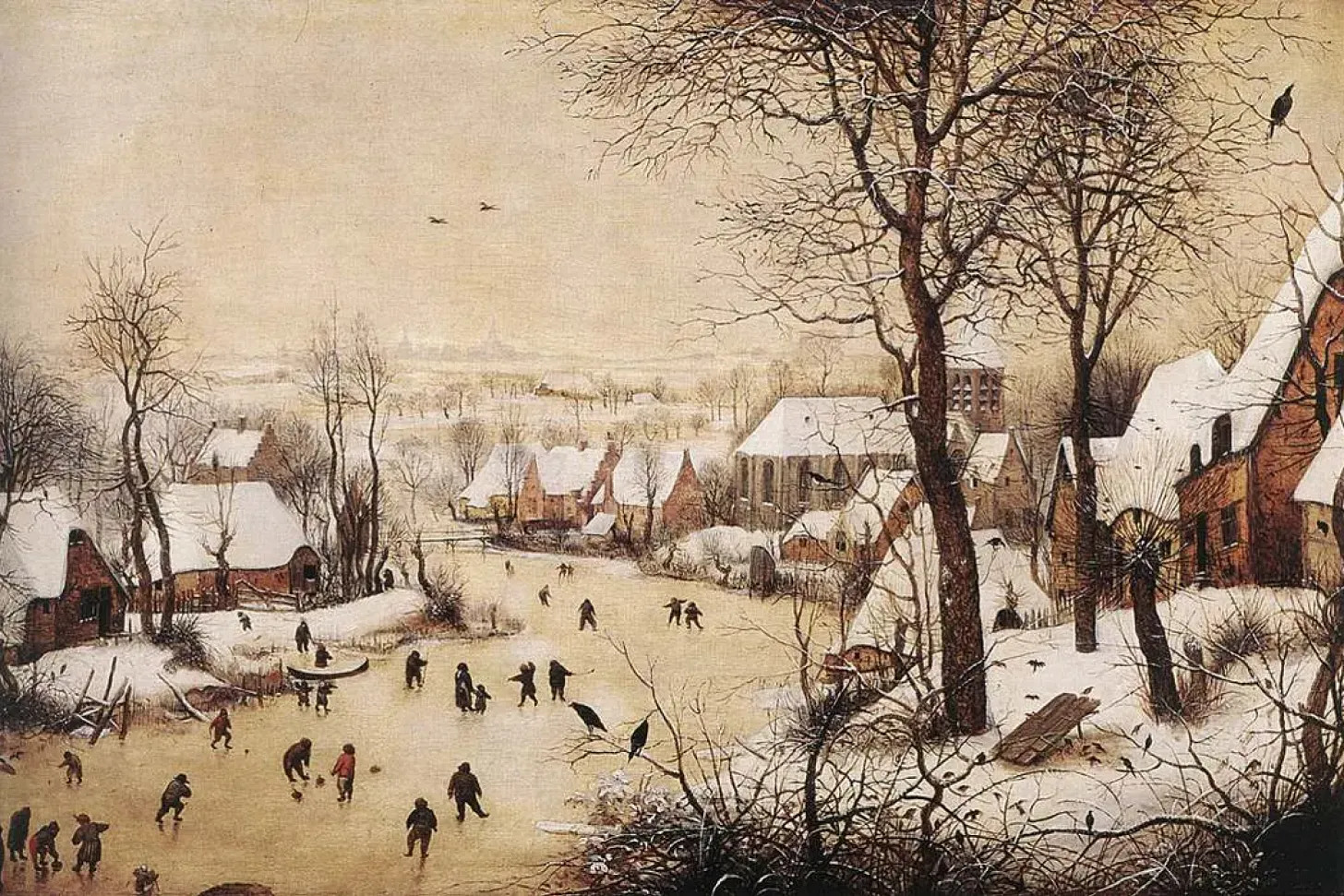
Pieter Bruegel, The Elder (Dutch, @1525-30-1569), Landscape with Ice-Skaters and Bird Trap, 1565, oil on wood 

Like all the seasons, winter has its complexities.  In the northern countries and states for instance it can be full of forbidding weather and solitude as well as a time of warm memories and get togethers with family and friends.  

Perhaps no one has captured winter's multiplicity better than the Dutch painter and printmaker Pieter Bruegel, The Elder in his 1565 Cycle of the Seasons paintings.  The most beloved of those may be the one above, Winter Landscape with Ice-skaters and Bird Trap.  It has been copied or imitated in art countless times, including exact 50 copies made by his son, Pieter Bruegel, the Younger and is a present day mainstay on calendars and winter memorbilia.

In it, Dutch villagers have gathered on a cold winter afternoon to enjoy ice activities together: skating at varying levels of skill, playing ice hockey (which may have started in Holland), curling and other sports as well as just walking on the ice and enjoying each other's company.  The white snow is cold as is the almost empty winter sky, but Bruegel's masterful choice of golden tones throughout makes his scene feel warm and inviting. It is full of heartwarming humanity, neighborly comraderie, spirited engagement and fun in spite of the freezing weather.  This warm portrayal of the best of winter has made the painting beloved for centuries.

But the year Bruegel painted this work, 1565, was in the midst of the Little Ice Age, an unexpected and relentless period of immensely harsh winters in Holland and throughout Northern Europe. And in the many non-human details throughout the painting Bruegel captures the cruel aspects of severe winter.  People are having fun on it but ice is unpredictable and people fall through and drown as Bruegel cautions with his dark open hole at the bottom. Winter puts food in short supply and the active little birds in the snow on the right are in imminent danger of being crushed by the heavy wooden trap set by occupants of a nearby house.  Most striking are the two large solitary black birds in the very center of the painting that sit on bare limbs looking down on the villagers as impassively as nature itself.  

The enduring power of Bruegel's straightforward, non-idealized portrayal of winter is all the more remarkable for his inventiveness.  Until shortly before Bruegel painted his winter scenes, Holland was part of Catholic Spain and virtually all the art produced was religious, patronized by the church. So when Holland won freedom from Spain there was no precedent or training in landscape art and everyday human activities.  This meant that Dutch artists had to re-invent Durch art, and Pieter Bruegel with his realistic rendering of nature, his creative use of color and brushwork, the precise detailing of human vivacity, grit, daily activity was one of the most famous and masterful pioneer. His paintings and prints also made him a formative influence on the Dutch Golden Age painters (Vermeer, Rembrandt, Hals in particular) who together created a turning point in art history.   

https://artsandculture.google.com/story/winter-through-bruegel-s-eyes-royal-museums-of-fine-arts-of-belgium/PwVx23r1GuwWIg?hl=en


Monday, December 8, 2025

Bows are IN --- Days 14/352 & 353

Walks: Hood

Distances: 3.5 miles

So, in her past Neighborhood Holiday Decorations travels Ciwt doesn't remember seeing a single bow that wasn't attached to a wreath.  This year they've freed themselves from their wreaths and been attached  everywhere!  Not very showy but quite dear up close.


Saturday, December 6, 2025

Official Balloons --- Days 14/350 & 351

Walks: yes, hood

Distances: yes, 3 miles


Ciwt is not usually a fan of balloon decorations, but these are cute and festive so she's making them official entrants in her Neighborhood Holidays Decorating Contest.

Thursday, December 4, 2025

Holiday Friends To Be(?) --- Days 14/348 & 349

Walks: Hood

Distances: 3 cold (for San Francisco) miles


Ciwt is looking forward to her amaryllises' showy company.  First comes the biting her fingernails part because they always look so unpromising.

Tuesday, December 2, 2025

Bargain Vacation --- Days 14/346 & 347

Walk: Asian Art Museum, Apple Cinema

Distance: 3.75 miles average


So Ciwt saved the plane fare and general travel hassles by traveling locally to one of her favorite places - a movie theater.  And Wake Up Dead Man, the next installment of the Knives Out murder mystery series, proved to be a delightful way to take a between holidays vacation.  Playing the role of Detective Benoit Blanc is such a romp for Daniel Craig who has actually upped his campy-hammy game, and Ciwt enjoyed going right along with him (as well as admiring his acting range).  This time Craig is matched with new-to-Ciwt Josh O'Connor who balances Craig perfectly both in story line and acting skills.  The rest of the cast is star studded, especially by Glenn Close who can do no wrong in Ciwt's book (but not necessarily in her role...).  As promised in the Knives Out series, the murder is wrapped up, but it takes many thought provoking twists and psycho-spiritual turns getting there.

Wake Up Dead Man will begin soon on Netflix (which produced it), but if you watch it there, you won't get the full over the top movie experience or the convenient mini vacation actual theaters provide.