Walk: Hood
Distance: 3 v. cold miles
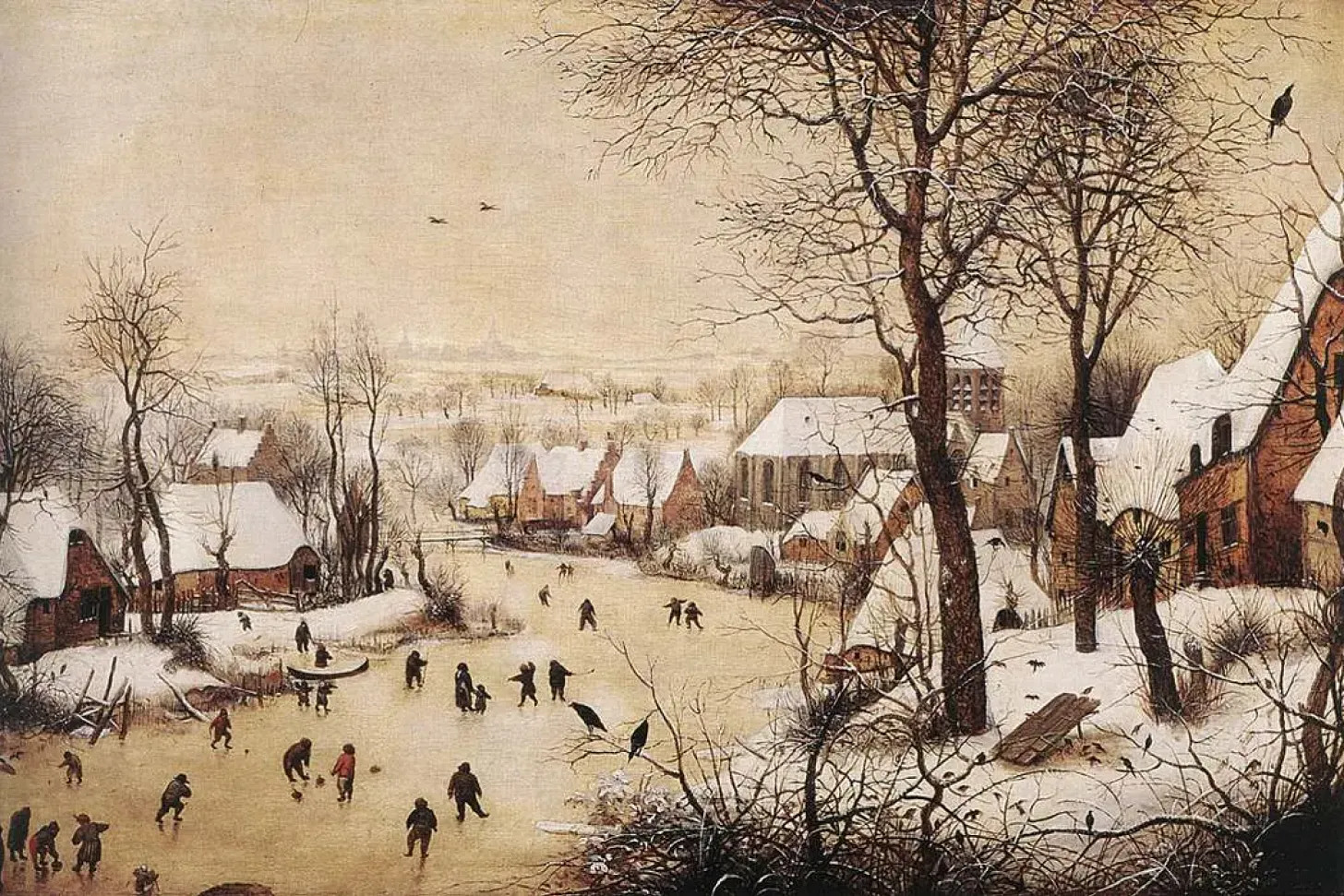 |
| Pieter Bruegel, The Elder (Dutch, @1525-30-1569), Landscape with Ice-Skaters and Bird Trap, 1565, oil on wood |
Like all the seasons, winter has its complexities. In the northern countries and states for instance it can be full of forbidding weather and solitude as well as a time of warm memories and get togethers with family and friends.
Perhaps no one has captured winter's multiplicity better than the Dutch painter and printmaker Pieter Bruegel, The Elder in his 1565 Cycle of the Seasons paintings. The most beloved of those may be the one above, Winter Landscape with Ice-skaters and Bird Trap. It has been copied or imitated in art countless times, including exact 50 copies made by his son, Pieter Bruegel, the Younger and is a present day mainstay on calendars and winter memorbilia.
In it, Dutch villagers have gathered on a cold winter afternoon to enjoy ice activities together: skating at varying levels of skill, playing ice hockey (which may have started in Holland), curling and other sports as well as just walking on the ice and enjoying each other's company. The white snow is cold as is the almost empty winter sky, but Bruegel's masterful choice of golden tones throughout makes his scene feel warm and inviting. It is full of heartwarming humanity, neighborly comraderie, spirited engagement and fun in spite of the freezing weather. This warm portrayal of the best of winter has made the painting beloved for centuries.
But the year Bruegel painted this work, 1565, was in the midst of the Little Ice Age, an unexpected and relentless period of immensely harsh winters in Holland and throughout Northern Europe. And in the many non-human details throughout the painting Bruegel captures the cruel aspects of severe winter. People are having fun on it but ice is unpredictable and people fall through and drown as Bruegel cautions with his dark open hole at the bottom. Winter puts food in short supply and the active little birds in the snow on the right are in imminent danger of being crushed by the heavy wooden trap set by occupants of a nearby house. Most striking are the two large solitary black birds in the very center of the painting that sit on bare limbs looking down on the villagers as impassively as nature itself.
The enduring power of Bruegel's straightforward, non-idealized portrayal of winter is all the more remarkable for his inventiveness. Until shortly before Bruegel painted his winter scenes, Holland was part of Catholic Spain and virtually all the art produced was religious, patronized by the church. So when Holland won freedom from Spain there was no precedent or training in landscape art and everyday human activities. This meant that Dutch artists had to re-invent Durch art, and Pieter Bruegel with his realistic rendering of nature, his creative use of color and brushwork, the precise detailing of human vivacity, grit, daily activity was one of the most famous and masterful pioneer. His paintings and prints also made him a formative influence on the Dutch Golden Age painters (Vermeer, Rembrandt, Hals in particular) who together created a turning point in art history.


No comments:
Post a Comment