Walks: Hood
Distance: 3.5 cold miles
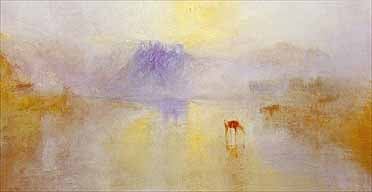
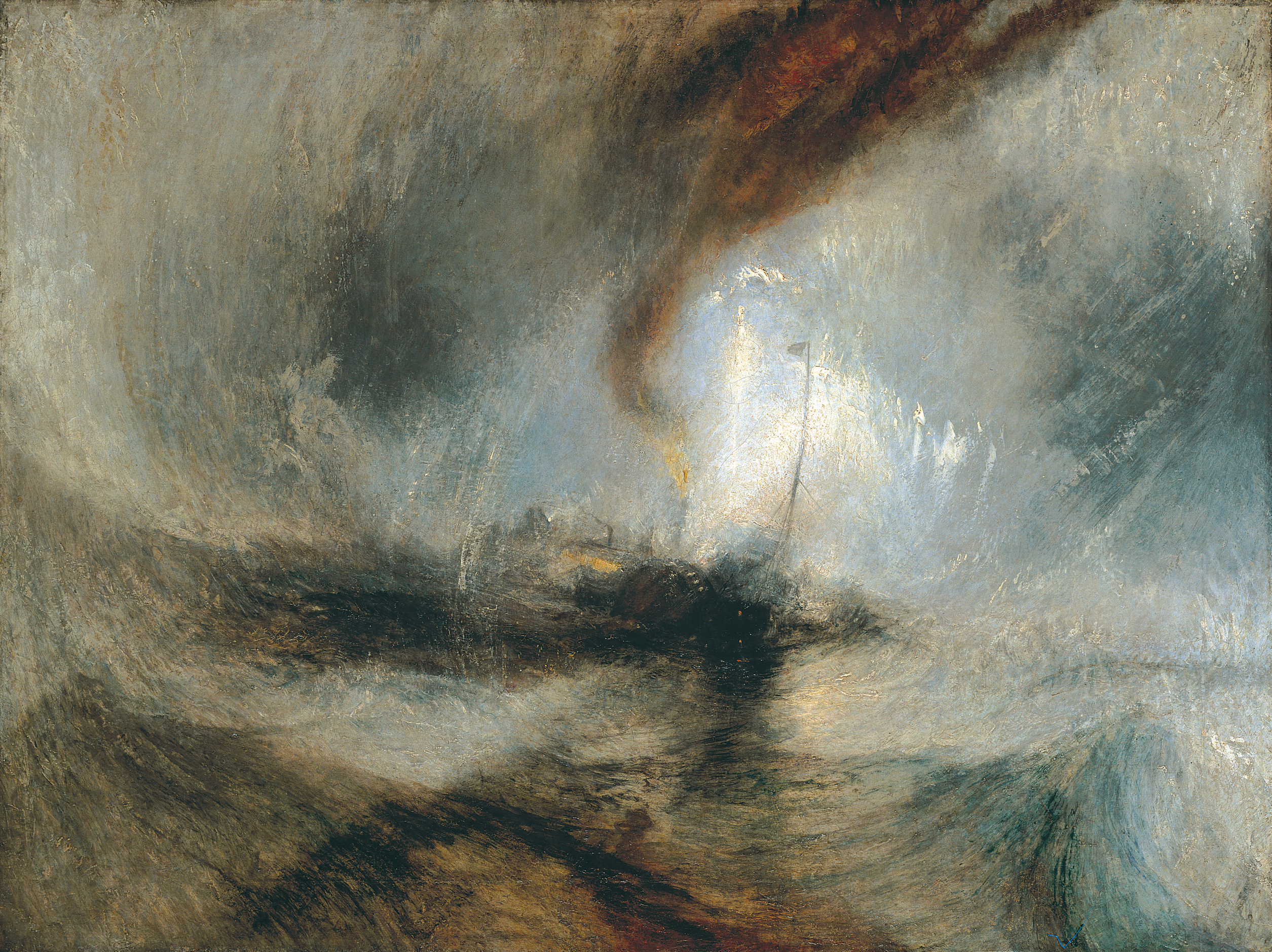 JMW Turner (1775-1851), Snow Storm - Steam Boat of a Harbour's Mouth Making Signals in Shallow Water, and going by the Lead. (The Author was in this Storm on the Night the "Ariel" left Harwich), 1842, Oil on canvas So when Ciwt thinks of the great JMW Turner's art she tends to picture his ethereal, glowing orange/yellow skies and peaceful images of English manor house estates and his paintings of the English seas and river Thames close to London: | ||||
|

This thinking overlooks the many intensely dramatic paintings he executed during his middle and late years. It also overlooks the fact that Turner often painted winter, and it was never charming, snow covered, quiet winter. Like the Snow Storm painting above, his winters were violent, dangerous and then sublime, which to Turner meant the overwhelming beauty and awe-inspiring grandeur of nature's elements.
She also forgets that Turner painted in the midst of the Industrial Revolution in England. Although Turner had a wide range of interests and was open to technology, his paintings make clear his deeply felt conclusion that no human invention could match the far greater might of nature, the sublime. In Snow Storm, Turner has chosen to feature a steamboat, a symbol of new 19th century technology, being utterly overwhelmed by the power of the sea.
Overlooked by Ciwt too is Turner's propensity toward the highly dramatic combination of real world and fiction - particularly in his later art. He was a highly focused, technically inventive and painter with an increasingly romantic mindset who believed man's emotional, individual responses to the world were of supreme importance.
This whether true or better served by dramatic fiction as shown by announcing in the full title of Snow Storm that he had been on this boat and in this storm. He claimed that he had been lashed to the mast of the ship in order to truly experience and convey nature's turbulent ferocity. In fact Turner was 67 when the painting was made and no sailors came forward to confirm they had tied Turner to the mast.
As was often common because Turner was ahead of his critics and already opening the door to future art movements like impressionism and expressionism, reaction to Snow Storm was deeply divided when it was made public. "Soap suds and white wash," one critic announced. Turner was reportedly hurt by the negative remarks, but continued on his passionate, inventive - obsessive really - artistic journey. Luckily and importantly so. Monet, Rothko and countless artists after Turner were transformed or emboldened upon encountering Turner's paintings, and Turner is widely regarded as the "Father of Modern Art."


No comments:
Post a Comment