Walk: GG Pickleball
Distance: 2 miles, 90 minutes pickle


Walk: GG Pickleball
Distance: 2 miles, 90 minutes pickle
Walk: Embarcadero Cinema (I'm Your Man)
Distance: 7 miles


Walk: No, big Necessary rainstorm
Distance: 0, yoga
 |
| Berthe Morisot (French, 1841-1895), Blanche (Fillette aux jacinthes), ca. 1875, Pastel over charchol on paper, laid down on canvas |
*Color Into Line: Pastels from the Renaissance to the Present, Legion of Honor, October 9 - February 13, 2022
**
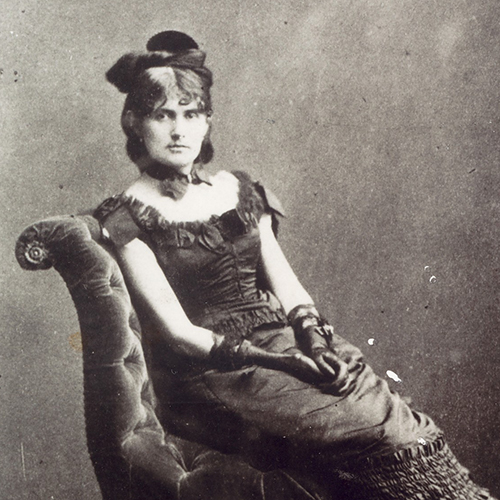 |
| Here is a picture of the artist, Berthe Morisot @1860. Ambitious, focused, privately trained/relentlessly innovative and one of only two women welcomed into the company of Paris's Impressionist painters. Ciwt doubts Morisot was overly sweet. |
Walk: Hood
Distance: 3.2 miles
 |
| Ciwt requests "Monster Mash" please. |
Walk: 1. LP Nails 2. No
Distance: 1. 1.5 miles, then much energy spent contacting Delta to cancel trip 2. 0, enjoying a bit of rain
 |
| Joseph Digiorgio (American 1931-2000), Central Park #1, 1984, oil and oil pastel on paper |
So the Legion of Honor's Pastel Show opened a little while ago. It is not a medium that particularly stimulates Ciwt, but she was curious to learn why green was such a difficult color for pastel makers to develop.
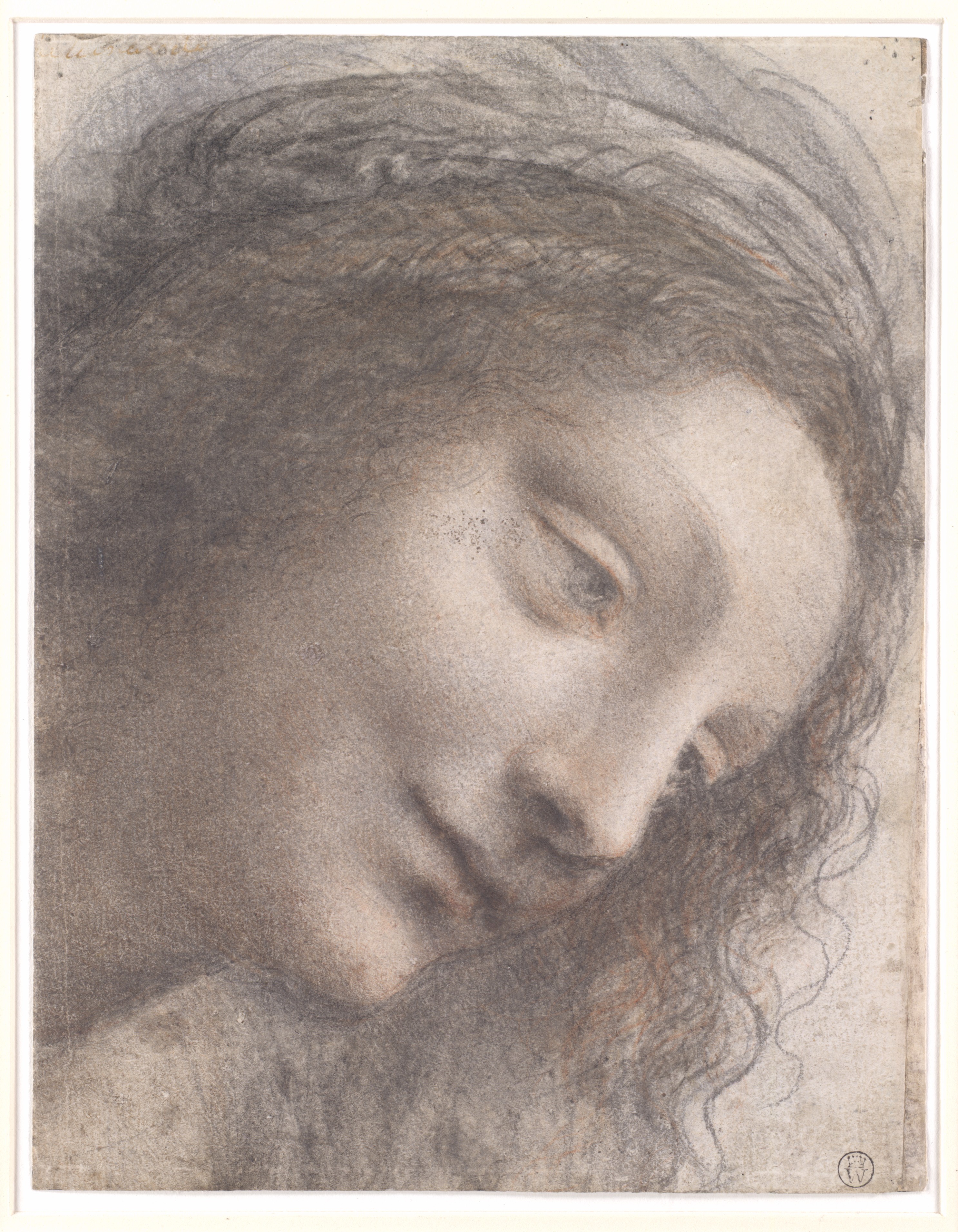 |
| Leonard da Vinci, The Head of the Virgin in Three Quarter View Facing Right, 1510-13, pastel on paper |
One of the first to invent a bright, lasting green hue was a Swedish chemist named Carl Wilhelm Scheele. In 1775 he accomplished that by using the toxic chemical arsenite. Unfortunately. Called Scheele's Green, it was so popular that it had replaced earlier mineral and vegetable dyes by the end of the 18th century. It was used on paper, wall hangings, fabrics, children's toys. Again, unfortunately! Journals of the time contain reports of children turning ill in bright green rooms and ladies in green dresses becoming sick from consuming toxic vapors. Some historians believe the pigment caused the death of Napoleon whose bedroom wallpaper featured the deadly hue.
 |
| Camille Pisarro (French 1831-1903), The Road to Ennery near Pointoise, 1874, oil pastel and pastel on paper |
Toward the mid-1800's Scheele's green was replaced by Paris Green. Another unfortunate development because it was still highly toxic and very popular with artists. It was the pigment used by French Impressionists such as Claude Monet, Paul Cezanne and Pierre-Auguste Renoir to create their lush green landscapes. Paris Green may have been responsible for Cezanne's diabetes and Monet's near blindness. In the 1960's it was finally banned.
Today, green is associated with being environmentally conscious—“being green." However, despite all the modern advances in color technology, producing green dyes and pigments is still difficult and many hues continue to feature toxic substances. One of the most common shades today is called Pigment Green 7. Used in plastics and paper, it contains chlorine, which, when consumed, is known to lead to illness and even death. Another popular hue is Pigment Green 36, which also includes chlorine as well as potentially hazardous bromide atoms. Also on the list, the popular bright Pigment Green 50 is a toxic cocktail of cobalt, titanium, nickel, and zinc oxide.
Oh dear, as Ciwt looks around her green painted rooms, she's beginning to feel a bit queazy.
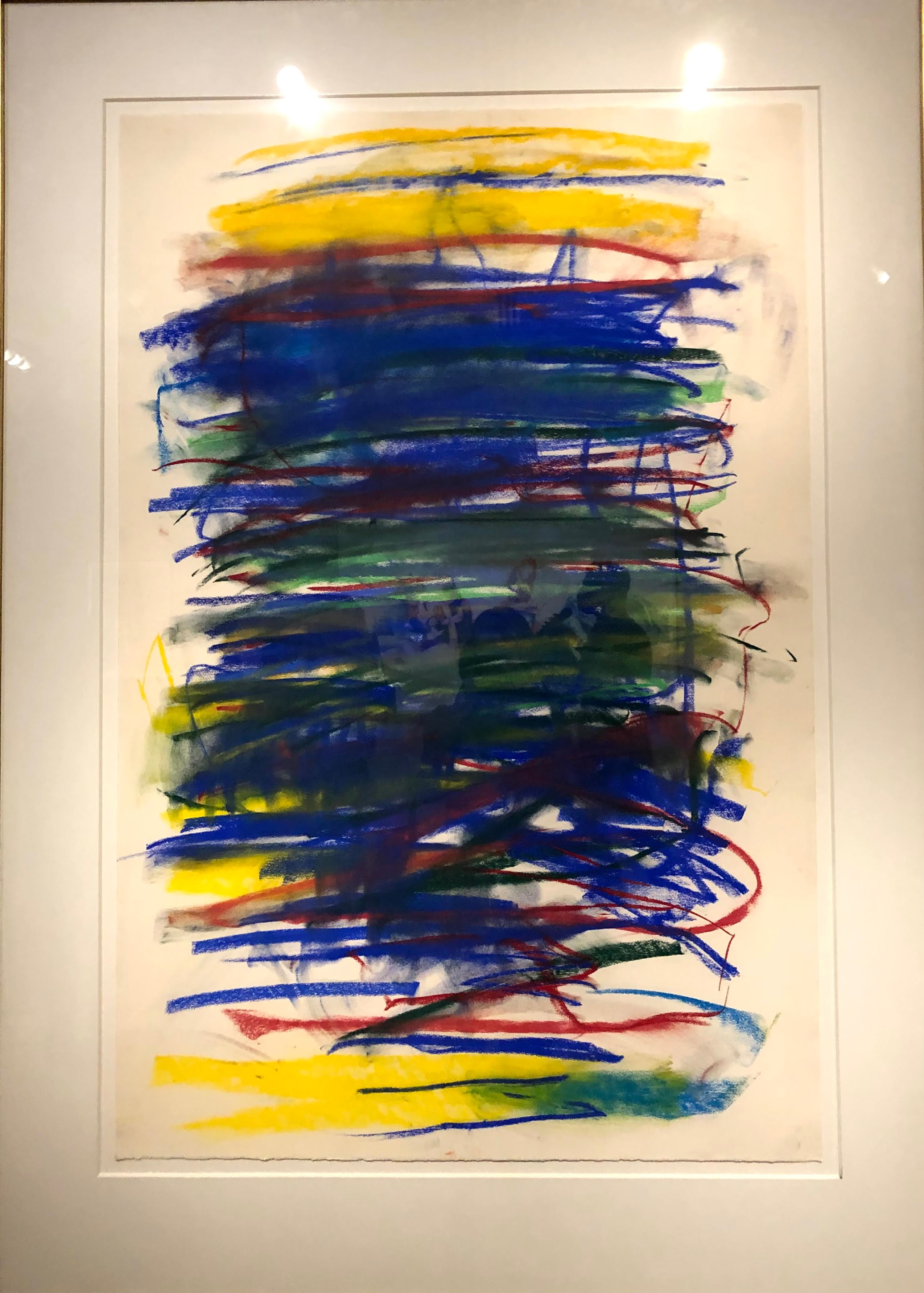 |
| Joan Mitchell (American 1925-1992), Untitled (pastel), 1991, pastel on paper |
Walk: Golden Gate Park Pickleball
Distance: 6 miles, 90 minutes pickle


Walk: Monday Errands
Distance: 5 miles
 |
| Arrrg##, I scare you!!! |
 |
| Not me, man. I'm cool. |


