Wednesday, July 8, 2020

Legacy of Care Continues --- Day 9/86

Walk: Dentist!
Distance: 4.6 miles, Yoga
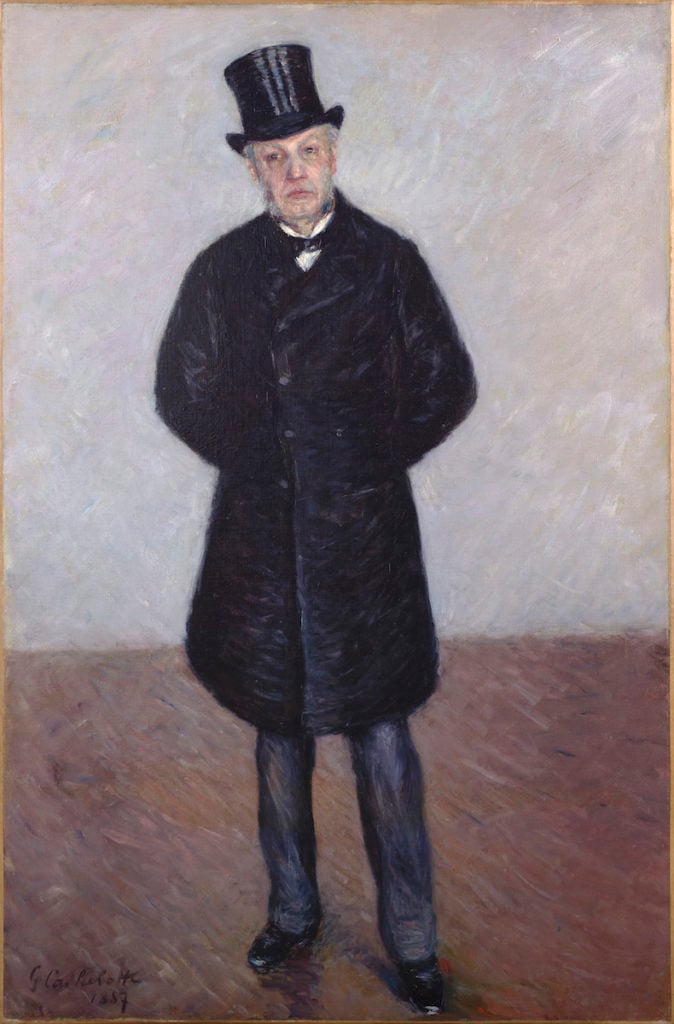
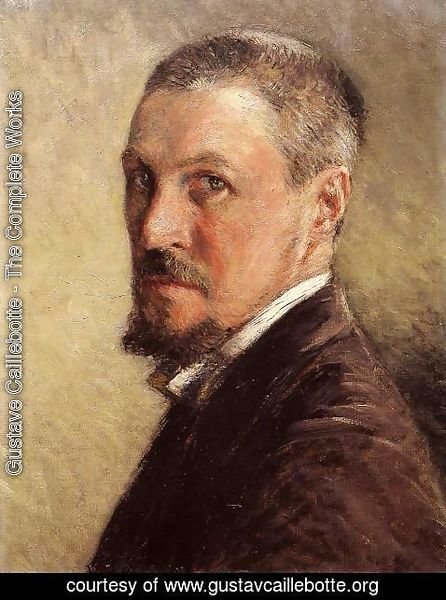
Gustave Caillebotte, Portrait de Jean Daurelle, en pied.
Donated to Musee d'Orsay, 2019

Gustave Caillebotte died of pulmonary congestion while working in his garden at Petit-Gennevilliers in 1894 at age 45. He is interred at Pere Lachaise Cemetery in Paris.

He had had no need for money or agents to promote his work and sold very few of his artworks during his lifetime.  His motives behind these few sales are unknown.  And the treasure trove of 68 masterpieces in the legacy he left to the French government did not include any by Caillebotte himself. Also, his remaining brother, Martial, retained the remaining artworks by Gustave in the family.  So, it is understandable that Caillebotte became far better known after his death for his collection of paintings by his Impressionist friends than for his own work which was largely forgotten..

Then somewhere around 1950 his descendents began to offer some of his works for sale, and the art world took particular notice in 1964 when the Art Institute of Chicage acquired Paris Street, Rainy Day.  Now the American art market woke up. By the 1970's  his work had been reassessed and exhibited for the first time in nearly 80 years.

But even then, Gustave's descendents have been slow to let go of his art.  Perhaps like him they have little need for the proceeds plus time is certainly on their side as his reputation continues to grow.  Some relatives insist that the only reason the family let go of Paris Street, Rainly Day is that no one had the necessary wall space to display the enormous work.

To Ciwt there is a certain charm in hearing about what has become of Caillebotte's works over the years. There often seems to be a certain care about how his work is passed on; money doesn't seem to be the entire point. For instance, a major work (but not from his most marvelous, early period), Chemin Montant, fetched $22 million at auction at Christie's just over a year ago.  An enormous amount of money yes, but it was sold specifically 'to benefit a charitable foundation."

And, again very recently, five little-known works which belonged to Caillebotte's butler, Jean Daurelle, were put on view at the Musee d'Orsay.  They were a remarkable gift made by Daurelle's great granddaugher. The works had been passed down to her through her family and could have been sold for large sums. But she refused all offers by hopeful buyers and donated them to the Musee which was thrilled and touched.

This gesture was right up Gustave's donating alley, and Ciwt likes to think he would have been pleased and proud.

Gustave Caillebotte, Chemin Montant, 1881, oil on canvas
Sold at auction to benefit a charitable foundation, 27 February 2019.  Fetched $22,000,000


Tuesday, July 7, 2020

Much More Then A Patron --- Day 9/85

Walk: No
Distance: Yoga

Gustave Caillebotte (1848-1894)


So today Ciwt is wondering where the whole Impressionist and post-Impressionist movements would be without Gustave Caillebotte.

Because the submissions of many of the group of artists who came to be associated with Impressionism were routinely rejected by the Academie's all important annual Salon de Paris they began to organize their own exhibitions.  The first of these, the Salon des Refuses in 1863, was sponsored by Napoleon III, but when the artists petitioned to have another of these salons they were rejected again and again.  So, in 1873, in frustration and desperation, several of them founded a Society to exhibit their artworks independently.

But establishing a formal name and intention was quite a different matter from financing their exhibitions and realizing money on sales.  Their names included Monet, Renoir, Sisley and others, and most of them were living on the edge of poverty.  It is not impossible to assume that many of them - hence the Impressionist movement - might have failed if it had not been for Caillebotte who funded several of their exhibitions and, now famously, purchased many of their works which form the cornerstone of the Musee d'Orsay collection of masterpieces from that period.

Probably because he had inherited a fortune at age 26 and never had to live off his art sales, Caillebotte, arguably one of the most important Impressionists, was the least well known until relatively recently.  (More on making a name in art in another CIWT).  As his name is coming to the fore, a charismatic, energetic, multi-talented man is being revealed.

For one thing, he was a serious, dedicated artist who painted several of the world's most important masterpieces.  Maybe you've read CIWT Day 9/83 or perhaps you've seen posters or been to the d'Orsay and viewed the actual and magnificent The Floor Scrapers.

Gustave Caillebotte, The Floor Scrapers, 1875, 6'4" x 4'9"

Then there is his brother, Rene, looking out of the window of the family home in Paris.


Young Man at His Window, 1875, 46"x32", oil on canvas


And, if you've been to the Chicago Institute of Art, you've certainly seen its other (besides George Seurat's  La Grande Jatte) most popular Impressionist painting:


Paris Street, Rainy Day, 1877, ca 6.9' x 9'

In addition to  being a licensed (but never practicing) lawyer, dedicated art patron, collector, and passionate painter, Caillebotte used his wealth to fund a variety of hobbies for which he was equally passionate.  These included stamp collecting (his collection is now in the British Museum), orchid horticulture, yacht building (he was a studied naval engineer), even textile design.  As if that isn't enough, Caillebotte's garden at his Petit Gennevilliers estate on the Seine was a strong influence on Monet's famous garden.  Caillebotten would sail downstream to Giverny and the two artist-gardeners would enjoy innumerable hours sharing thoughts on their mutual loves.


Gustave Caillebotte in photo taken by his brother, Martial, 1892

Monday, July 6, 2020

No d'Orsay? --- Day 9/84


Walk:  Hood/Presidio
Distance:  3 miles walk/lope

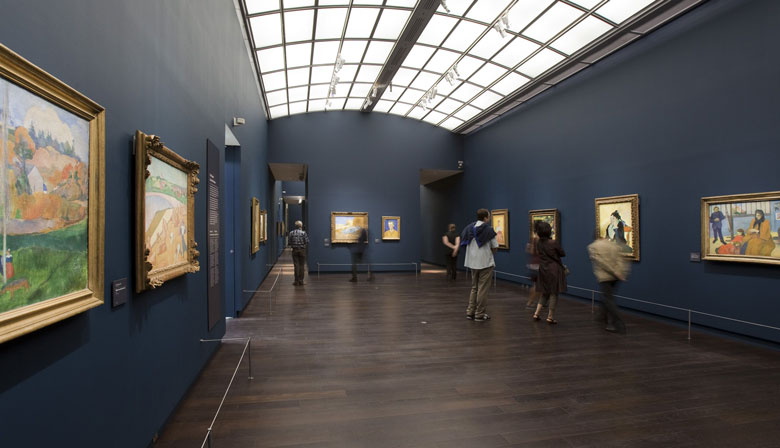
One of many Impressionist and post-Impressionist galleries at the Musee d'Orsay

It could be argued there would be no Musee d'Orsay without Gustave Caillebotte.  Or that the museum would not attract as many visitors.  It had 3.6 million in 2019, many of whom came for the sole purpose of viewing the largest collection of Impressionist and post-Impressionist masterpieces in the world.  And most of those masterpieces were bequested by Caillebotte in his will as a gift to the Government of France.

This incredible bequest was accepted only relunctantly by the State.  In fact they refused the paintings at first.  Why?  Well, the 68(!) paintings in his collection were by Caillebotte's friends and acquaintances whom he liked, admired and patronized.  Their names included Monet (they were gardening buddies), Manet, Renoir, Degas, Cezanne, Seurat, the list goes on.  Virtually all either Impressionists or Post-Impressionists which was France's problem with the collection.  In 1894, at the time of Caillebotte's early death at age 45 and will, those two art forms were still considered minor, possibly a passing fad, by the powers that be in the French art world. The French state was actually quite embarrassed by the gift and reluctant to devote valuable museum exhibition space to it. 

Finally, three years later, they accepted the bequest.  By that time, they had culled through it, and deemed only 40 acceptable.  (The rest were refused and either retained or sold by the family).  Finally the Caillebotte Room at the Luxembourg Palace opened to the public in 1897, the first exhibition of Impressionist paintings ever to be displayed in a French Museum.

The rest of course is history.  Much to the dismay of the French government who made an attempt to reclaim the other 28 works in 1928.  The government was rebutted by Caillebotte's heirs and the works remain in private - or non-Musee d'Orsay museum - collections to this day.  The original paintings from Caillebotte's legacy form the core of the Musee d'Orsay's renowned Impressionist collection.  Heureusement! (ie, Luckily)


Sunday, July 5, 2020

What Work Looks Like --- Day 9/83

Walk: Presidio
Distance: 2.5 miles, Housework (whew)

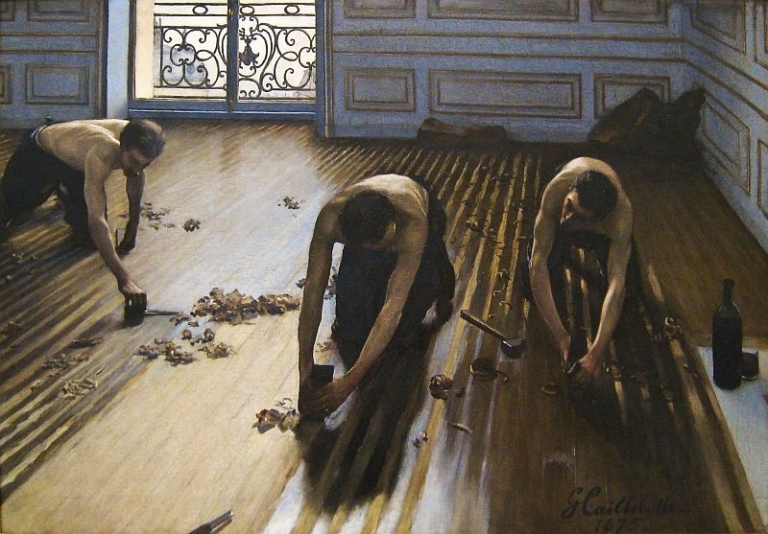
Gustave Caillebotte, The Floor Scrapers, 1875, 6'4" x 4'9"
Well, Ciwt didn't work quite this hard cleaning her place today.  But it felt this way at times because she doesn't have her housework skills down.

Viewing the famous and greatly respected The Floor Scrapers, it is easy to see how Caillebotte gained his reputation as one of the great realist artists of the 19th century.

The Floor Scrapers is known for its early depiction of the urban working class at work.  Until this painting, nearly all pictures of men and women at work were country scenes of farm workers and peasants (often idealized or standing for a particular political message). Caillebotte has no such message about his subjects here, or, if he does, he avoids the temptation to contain it in his painting.  Instead he paints masterfully in a neutral, nearly documentary style focusing on the workers' actions, tools, muscular bodies and the soft lighting.  Perhaps his neutrality is one of the reasons the The Floor Scrapers continues to be beloved and respected by viewers at all levels of society.

More to come on Monsieur Gustave Caillebotte....

Saturday, July 4, 2020

Perspective --- Day 9/82

Walk: Presidio
Distance: 3 Miles, Yoga

San Francisco National Cemetery, July 4, 2020


Friday, July 3, 2020

Red at the Library --- Day 9/81

Walk: Presidio
Distance: 5 miles, Yoga


Thursday, July 2, 2020

Everywhere Puce --- Day 9/80

Walk: No
Distance: Yoga


Perhaps she is facile, but bright colors to Ciwt are happy colors and dark ones aren't.  There's a particular dark color that she finds gloomy bordering on alienating.  Puce.

By definition puce is a dark red or purple brown, a brownish purple-grey color.  Ick!  It gets worse: Puce (according to an online source) means 'flea' in French, and (the source goes on) its use as a color is said to refer to the color of bloodstains in your sheets due to flea bites.

So why oh why did Mark Rothko have to use puce throughout his Rothko Chapel (and put an end Ciwt's unqualified love of his art)?

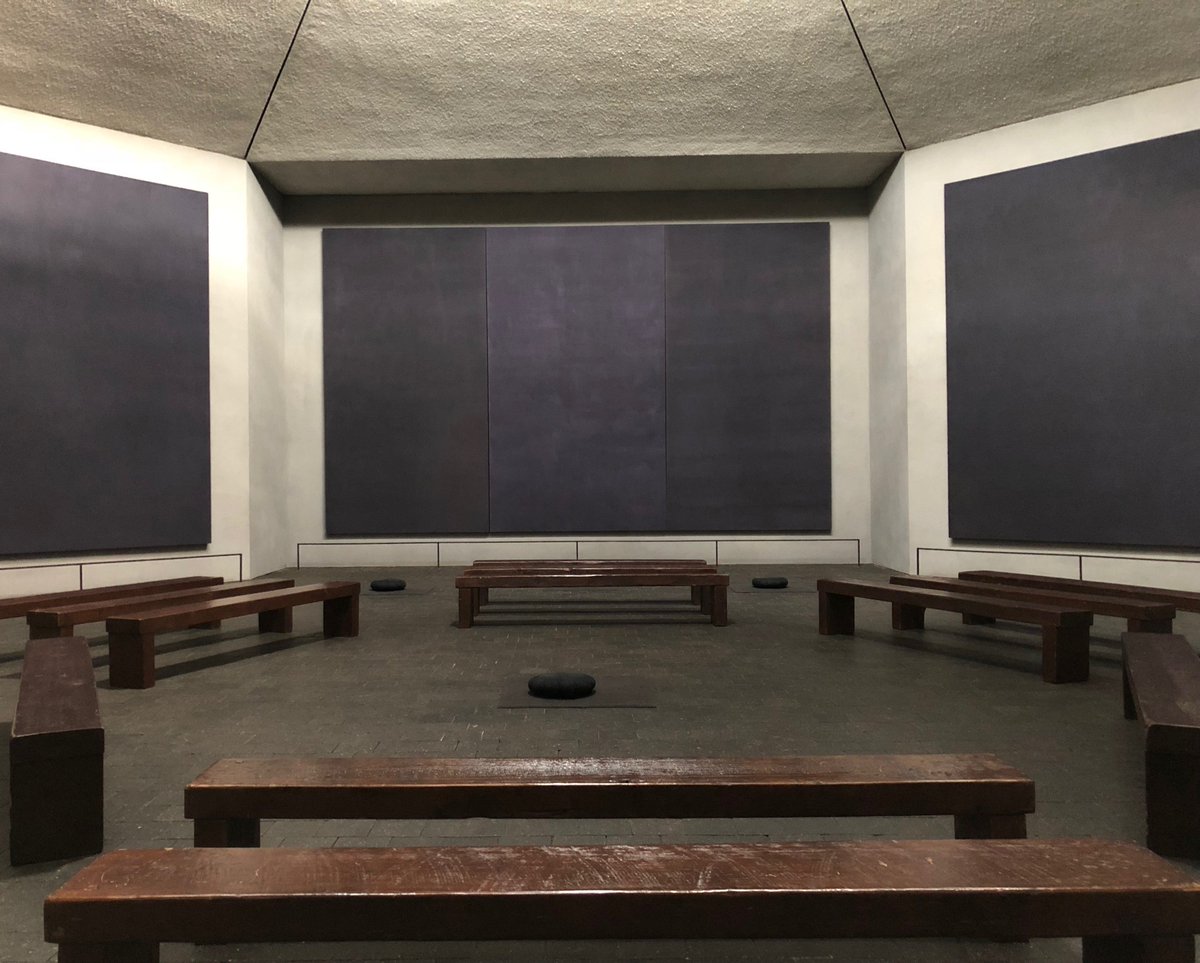
Rothko Chapel, Interior, Houston


Perhaps his Houston patrons who commissioned the Rothko Chapel, John and Dominique de Menil,  had the same question. Reportedly Dominique's first reaction when she saw the paintings was "Frankly, I expected color."  (Yes!  Those beautiful stirring colors from earlier in the 60's - and yesterday's CIWT). Actually, Rothko had an answer to that question: It took him a year to decide what the paintings should be: Something you don't want to look at. 
 
Rothko's health, state of mind and, likely, spirit were deteriorating as he painted the Chapel paintings in a New York studio in 1967.  In late 1970, a year before the Chapel opened, he committed suicide, and the story of the Chapel became complicated and controversial.

Perhaps the main controversy surrounds the beauty and feeling of the Rothko Chapel.  There are many, locally and internationally, who adore the paintings and come in solitude to meditate, reflect, be with their private thoughts. As Carol Mancusi-Ungaro, a conservator for the Whitney Museum wrote in 2001, "The Chapel ..leaves you alone with yourself, your thoughts, your emotions, your vulnerabilities..The artist did not want the paintings to come out to you; he wanted them to draw you in." 

Then there is the other camp.  One Texas artist is quoted as saying bluntly of the chapel, "It is a place where art and life and imagination go to die." And, one of Rothko's greatest art critic defenders described the Chapel as "at worst a well-designed crematorium." 

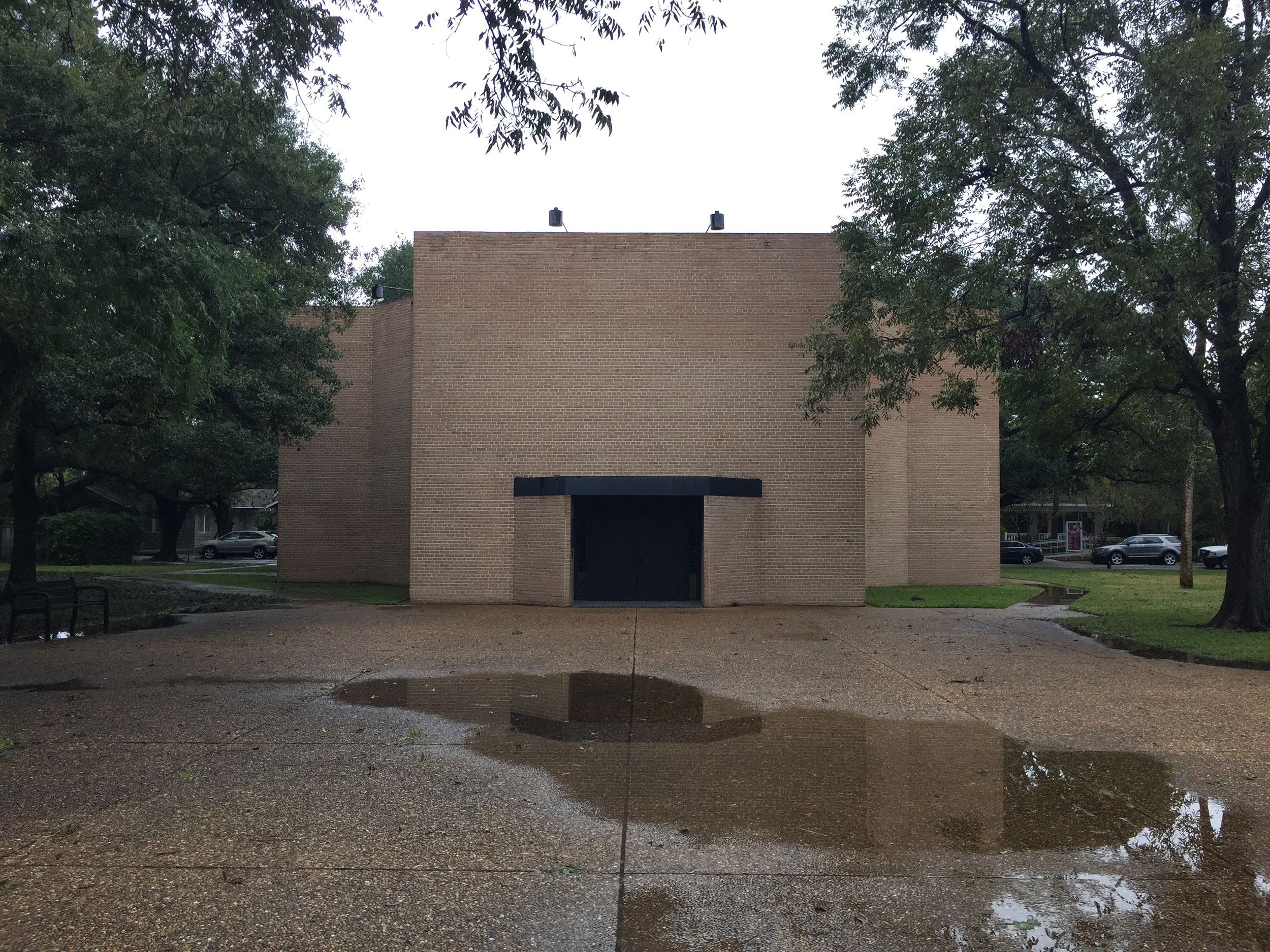
Rothko Chapel Exterior

Sight unseen, Ciwt has a pretty good sense of where she positions herself in this debate.  If he just hadn't chosen PUCE.....


Wednesday, July 1, 2020

Let There Be Light --- Day 9/79

Walk: Hood
Distance: 4.4 miles, Yoga

So, Ciwt is a longtime fan of Mark Rothko's art.

Rothko was at heart a musician; classical music was rarely off as he painted.  He immersed himself in the sounds, particularly Mozart's, the way Mozart's musical textures gave way to emotionality.  Joy, tragedy, ecstacy.  That power of  'going beyond' into spirit was Rothko's near impossible quest for his canvasses.

And so often it is what he achieved with his softly bleeding blocks of rich color.  In the 50's and 60's, his heyday, his works were titled simply - the year, a number, sometimes mention of the colors - but their effects were huge. At MoMA in the 1960's Ciwt remembers  numerous people dissolving into tears within moments of encountering his canvasses.  It was unexpected and spontaneous for them; something about his large expanses of subtly applied color tapped into their emotions and spirit in a profound, sensory way.


Orange Red Yellow, 1961
And there was inner light.  His colors were so compressed, the many washes so skillfully layered, the depth so deep that the best - and there were many - emitted a glow.  Like a very muted sun, even the dark ones.  If some of those were put together in an unlit room, they would literally light the room of their own accord.  Ciwt saw this for herself in one room at MoMA filled with several of his blue and black works.  The room was transporting; it felt as if she was bathed in moonglow.


It was magical and remarkable.  Ethereal, and Ciwt certainly wasn't alone in feeling this.  One of Rothko's curators for a London exhibition captured the effect of this genius:  “[Rothko] asked me to switch all the lights off [late afternoon, when daylight had practically gone], everywhere; and suddenly, Rothko’s colours made its own light: the effect, once the retina had adjusted itself, was unforgettable, smoldering and blazing and glowing softly from the walls – colour in darkness… the world Rothko had made, in those perfect conditions, radiating its own energy and uncorrupted by artifice or the market place.”

But, as deeply as Rothko's art speaks to her, she has questions about about  how she would respond to visiting the Rothko Chapel in Houston, Texas.   More on that tomorrow.